

Description
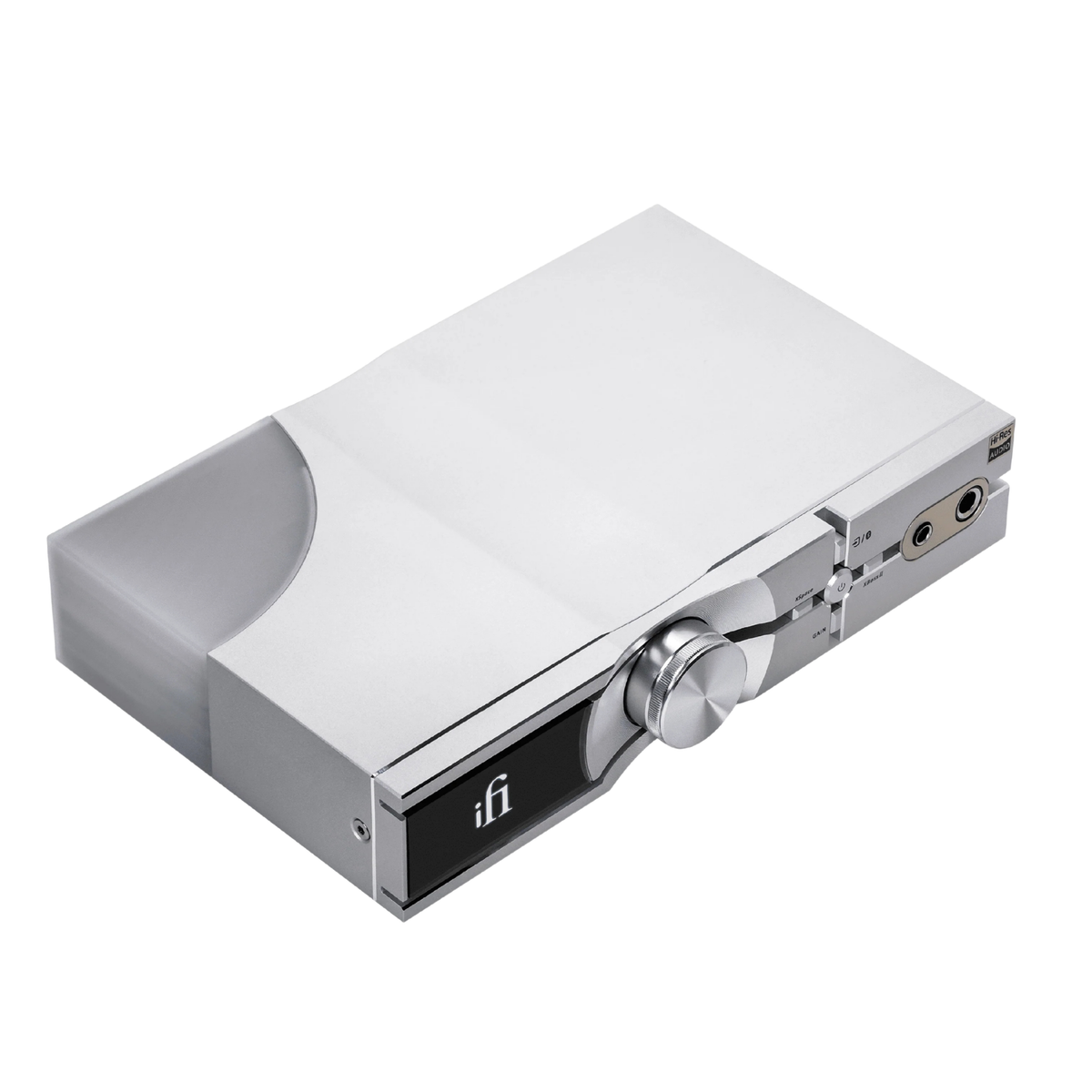
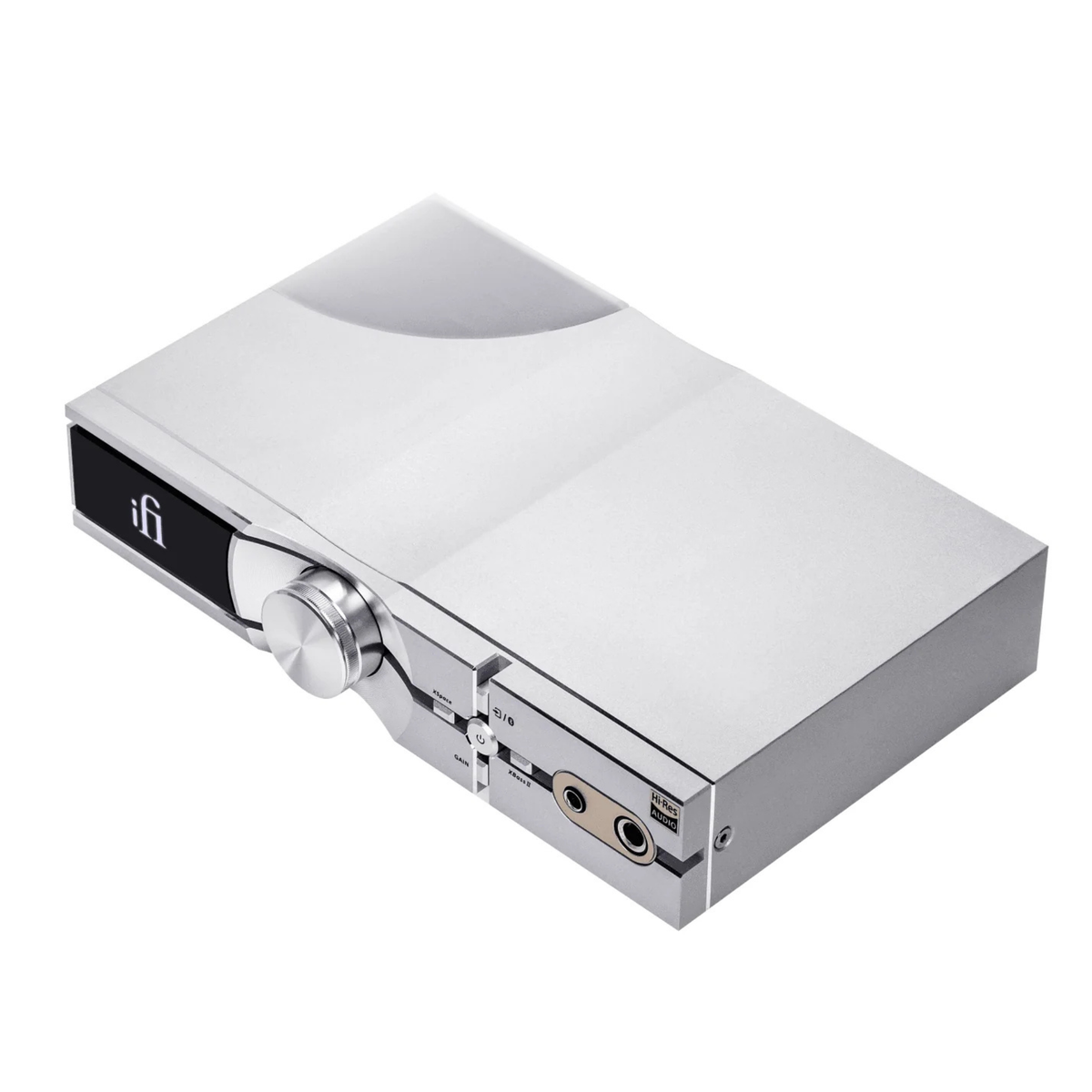
The iFi NEO iDSD 2 is a versatile desktop DAC and headphone amplifier designed for high-performance headphone listening, HiFi systems, and powered-speaker setups. It combines a Burr-Brown True Native DAC, PureWave balanced circuitry, powerful headphone amplification, Bluetooth 5.4 with aptX Lossless, and flexible fixed or variable analogue outputs in a compact chassis.
The balanced 4.4mm headphone output delivers up to 5,551mW at 32 ohms, providing substantial power for demanding headphones. Auto iEMatch helps accommodate sensitive IEMs, while selectable gain settings allow the NEO iDSD 2 to work with a broad range of headphone types.
Digital conversion is handled by iFi's Burr-Brown True Native architecture, supporting PCM up to 32-bit/768kHz and native DSD up to DSD512. Four selectable digital filters provide additional control over playback, while iFi's GMT femto-precision clock and intelligent memory buffer are designed to reduce jitter within the digital signal path.
Wireless playback is handled by Qualcomm's QCC518x Bluetooth platform with Bluetooth 5.4 and support for aptX Lossless, aptX Adaptive, LDAC, LHDC/HWA, aptX, AAC, and SBC. The Bluetooth engine can also receive over-the-air updates for future compatibility.

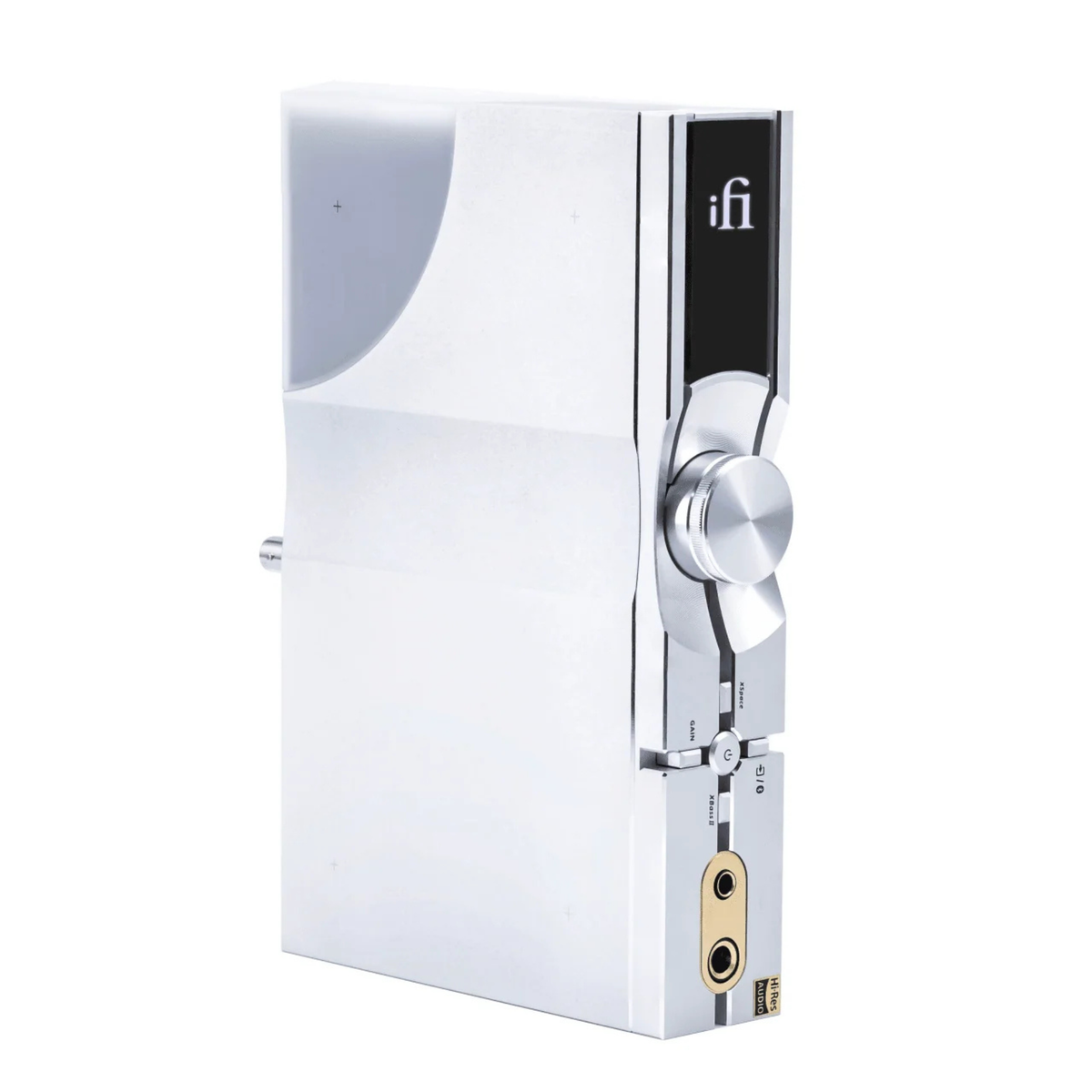
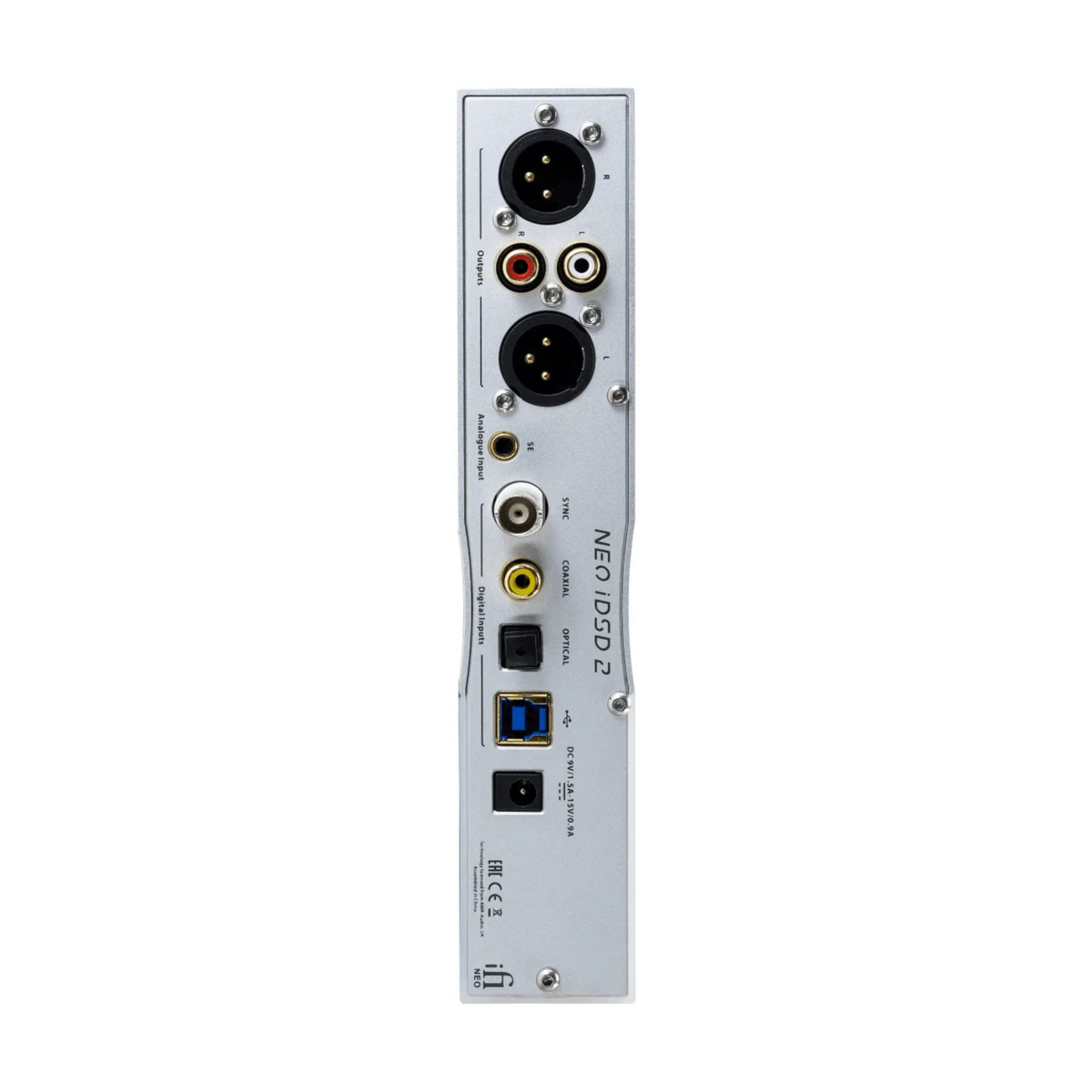
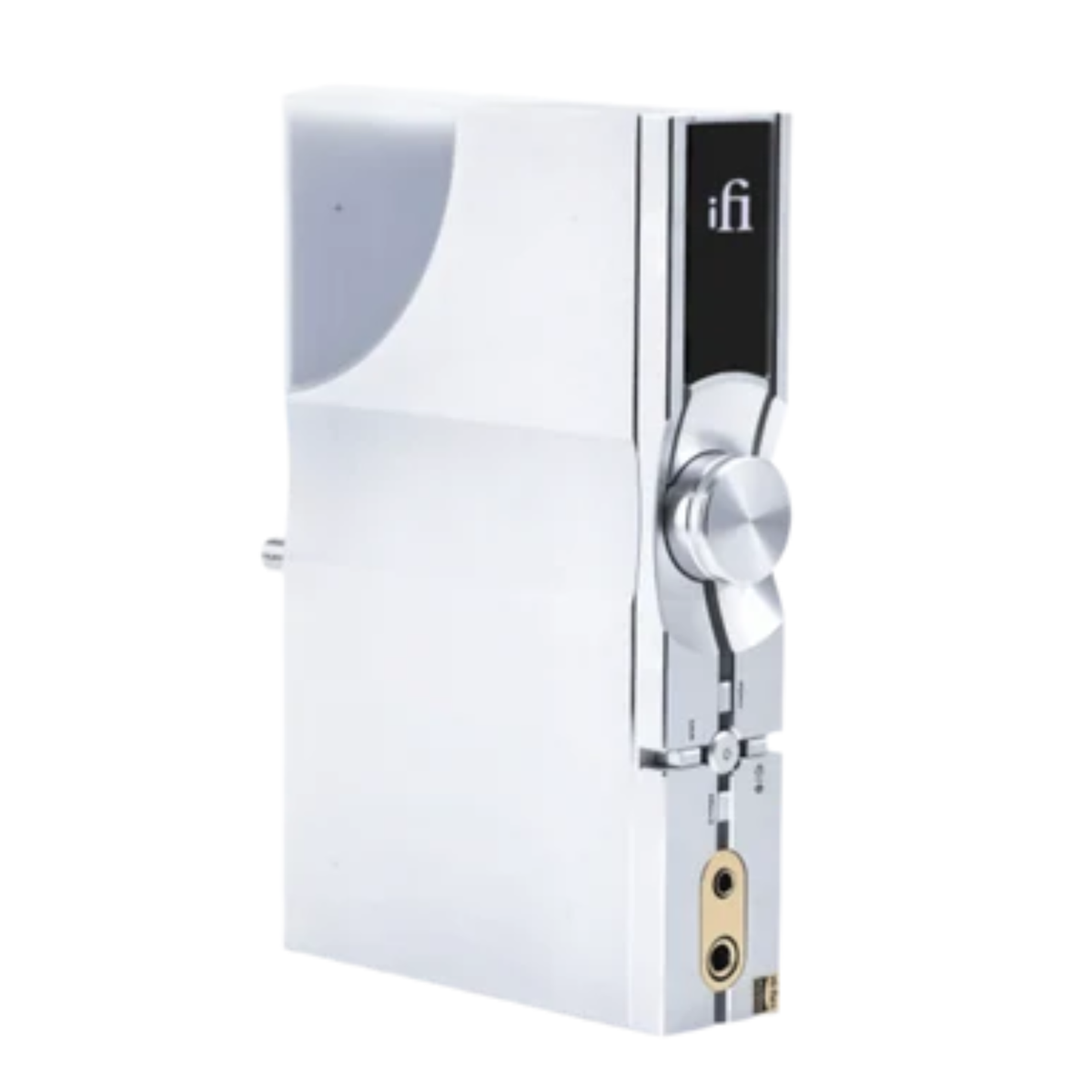
The NEO iDSD 2 can operate as a headphone DAC/amp, a fixed-output DAC connected to an integrated amplifier or separate headphone amplifier, or a DAC/preamp driving powered speakers or a power amplifier. Balanced XLR and single-ended RCA line outputs provide flexible system integration, while the 2-inch colour display automatically rotates for horizontal or vertical placement.
High-Power Headphone Amplification
The balanced 4.4mm headphone output provides up to 5,551mW at 32 ohms and 650mW at 600 ohms, giving the NEO iDSD 2 the power and voltage capability to accommodate a wide range of planar magnetic and high-impedance dynamic headphones.
A 6.35mm single-ended headphone output is also provided, while Auto iEMatch helps optimize operation with sensitive in-ear monitors.
Burr-Brown True Native DAC
iFi's Burr-Brown True Native architecture maintains separate pathways for PCM and DSD through conversion. The NEO iDSD 2 supports PCM up to 32-bit/768kHz, native DSD up to DSD512, DXD, and full MQA decoding.
Four selectable digital filter options allow listeners to adjust digital playback according to their system and preferences.
Bluetooth 5.4 with aptX Lossless
The NEO iDSD 2 uses Qualcomm's QCC518x Bluetooth platform and supports aptX Lossless at up to 1,200kbps for compatible source devices.
Additional codec support includes aptX Adaptive, LDAC, LHDC/HWA, aptX, AAC, and SBC. All supported 24-bit-capable codecs can operate at sample rates up to 96kHz, depending on the connected source and codec.
GMT Clocking & External 10MHz Sync
iFi's GMT (Global Master Timing) femto-precision clock works with an intelligent memory buffer to reduce jitter within the digital stage.
A rear-panel 10MHz external sync input also allows the NEO iDSD 2 to synchronize with a compatible external reference clock, providing additional flexibility for advanced digital audio systems.
PureWave Balanced Circuitry
The NEO iDSD 2 uses iFi's PureWave balanced, symmetrical dual-mono topology with short, direct signal paths. The design supports both the headphone and line-output sections while maintaining low noise and distortion.
XBass II & XSpace
XBass II and XSpace provide analogue sound-adjustment options for headphone listening.
XBass II provides analogue low-frequency adjustment, while XSpace is designed to alter spatial presentation for listeners who prefer a broader headphone soundstage. Both operate in the analogue domain rather than through digital signal processing.
KEY FEATURES
-
5,551mW Maximum Balanced Output — The 4.4mm balanced headphone output delivers up to 5,551mW at 32 ohms and 650mW at 600 ohms.
-
Burr-Brown True Native DAC — Supports PCM up to 32-bit/768kHz, native DSD up to DSD512, DXD, and full MQA decoding.
-
Bluetooth 5.4 with aptX Lossless — Qualcomm QCC518x Bluetooth platform supports aptX Lossless at up to 1,200kbps along with aptX Adaptive, LDAC, LHDC/HWA, aptX, AAC, and SBC.
-
Auto iEMatch — Helps optimize headphone output for sensitive IEMs while complementing the NEO iDSD 2's high-power headphone capability.
-
PureWave Balanced Architecture — Balanced, symmetrical dual-mono circuitry with short, direct signal paths.
-
GMT Femto-Precision Clock — Internal GMT clocking and intelligent memory buffering are designed to reduce jitter within the digital stage.
-
External 10MHz Clock Input — Allows synchronization with a compatible external reference clock.
-
Four Digital Filters — Selectable digital filtering provides additional playback adjustment.
-
XBass II & XSpace — Analogue sound-adjustment options for bass response and spatial presentation.
-
Three Operating Configurations — Use the NEO iDSD 2 as a headphone DAC/amp, fixed-output DAC, or variable-output DAC/preamp.
-
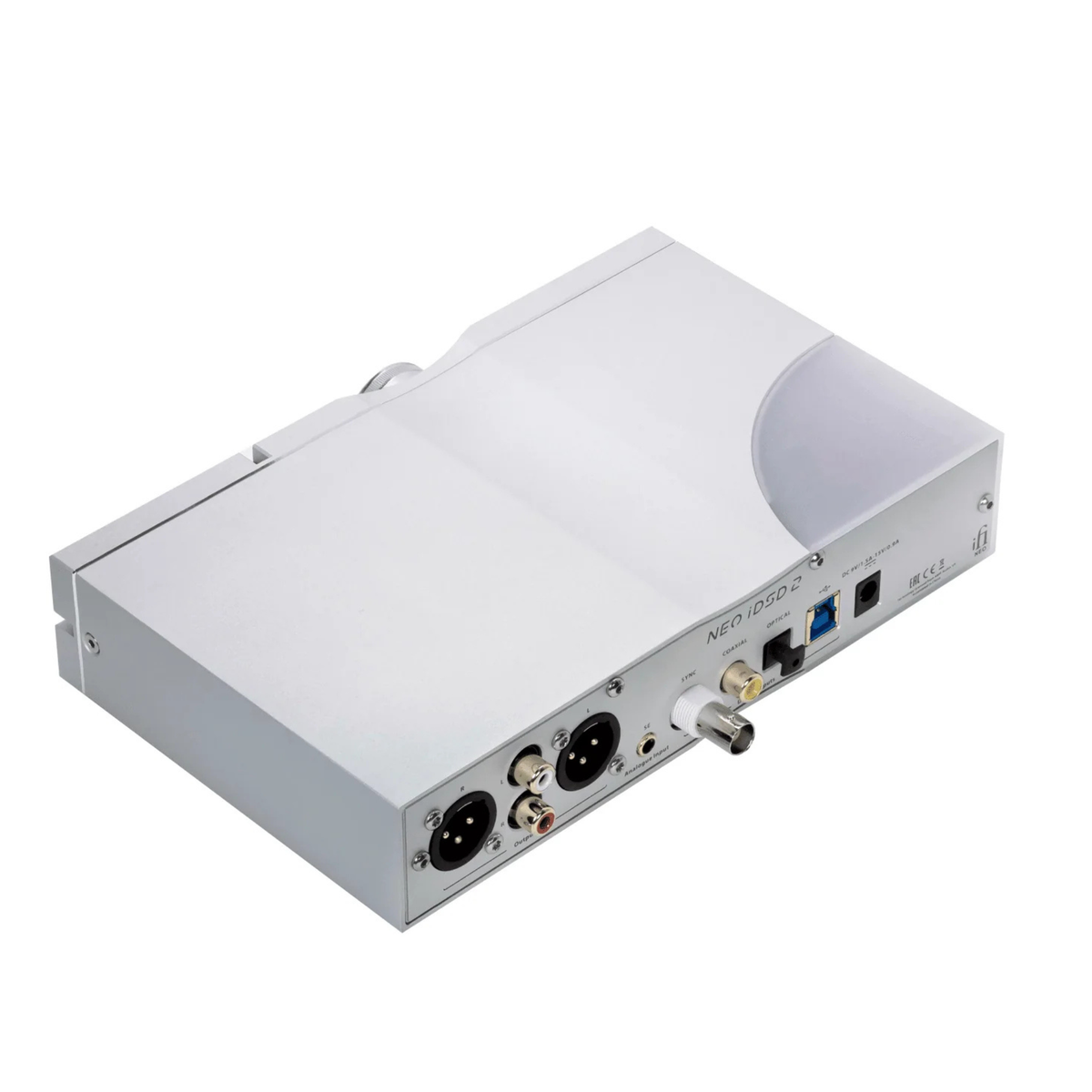
Balanced XLR & RCA Outputs — Fixed and variable analogue outputs support integration with amplifiers, power amplifiers, and powered speakers.
-
2-Inch Auto-Rotating Colour Display — Automatically changes orientation for horizontal or vertical placement.
CONNECTIVITY & COMPATIBILITY
Digital Inputs
-
USB 3.0 Type-B (USB 2.0 compatible)
-
S/PDIF coaxial
-
S/PDIF optical
-
Bluetooth 5.4
Analogue Input
-
3.5mm single-ended analogue input
External Clock
-
10MHz external sync input
Analogue Line Outputs
-
Balanced XLR — fixed or variable
-
Single-ended RCA — fixed or variable
Headphone Outputs
-
4.4mm balanced
-
6.35mm single-ended
-
Balanced maximum: >13.3V / 5,551mW at 32 ohms; >19.5V / 650mW at 600 ohms
-
Single-ended maximum: >9.5V / 2,832mW at 32 ohms; >10.5V / 184mW at 600 ohms
-
Output impedance: <1 ohm
Supported Formats
-
PCM: up to 32-bit/768kHz
-
DSD: up to native DSD512
-
DXD
-
MQA: Full Decoder
Bluetooth
-
Bluetooth 5.4
-
aptX Lossless
-
aptX Adaptive
-
LDAC
-
LHDC/HWA
-
aptX
-
AAC
-
SBC
Power
-
iFi iPower2 external power supply included
-
Power consumption: approximately 5W with no signal / approximately 13.5W maximum
Frequently Asked Questions
What makes the NEO iDSD 2 different from the ZEN DAC 3?
What headphones benefit from the 5,551mW output?
What is aptX Lossless?
What is the 10MHz external clock input for?
Does Auto iEMatch work automatically?
Can the NEO iDSD 2 drive powered speakers directly?
Can I connect a turntable to the NEO iDSD 2?
What is the difference between fixed and variable output?
Specifications
| TECHNICAL SPECIFICATIONS | |
| Bluetooth Formats | Bluetooth 5.4 (aptX Lossless, aptX Adaptive, aptX, LDAC, HWA/LHDC, AAC and SBC) |
| Dimensions | 214 x 158 x 41 mm (8.4" x 6.2" x 1.6") |
| DNR |
Line Section: >120dB(A) @ -60dBFS Headphone Section: -120dB(A) |
| Formats Supported | PCM 768kHz; DSD 512 (22.6MHz); MQA Full Decoder |
| Input | USB3.0 B (USB2.0 Compatible); S/PDIF (Coaxial up to 192kHz, Optical up to 96kHz) |
| Limited Warranty | 12 Months** |
| Maximum Output Power |
Headphone Section: Balanced: >19.5V/650 mW (@ 600Ω); >13.3V/5,551 mW (@ 32Ω) Unbalanced: >10.5V/184 mW (@ 600Ω); >9.5V/2,832 mW (@ 32Ω) |
| Output |
Line Section Outputs: Balanced XLR: 19.5V max. (Variable) 4.4V Fixed Unbalanced RCA: 10.5V max. (Variable) 2.2V Fixed Headphone Section Outputs: Balanced 4.4mm: 3.5V / 19.5V max. (12Ω – 600Ω Headphone) Unbalanced 6.3mm: 4.5V / 9.50V max. (12Ω – 300Ω Headphone) |
| Output Impedance |
Line Section XLR ≤100Ω; RCA ≤50Ω Headphone Section <1Ω |
| Power Consumption | No Signal ~5W; Max Signal ~13.5W |
| RMS Output Power |
Headphone Section: Balanced: >19.3V/620 mW (@ 600Ω); >12.7V/2530 mW (@ 64Ω) Unbalanced: >9.7V/157 mW (@ 600Ω); >9.4V/1390 mW (@ 64Ω) |
| SNR |
Line Section: <-120dB(A) @ 0dBFS Headphone Section: >120dB(A) (3.3V 6.3mm/6.2V 4.4mm) |
| THD+N |
Line Section: <0.0015% @ 0dBFS Headphone Section: <0.0015% (125mW @ 32Ω) |
| Net Weight | 916g (2.0 lbs) |
| WHAT'S INCLUDED | |
| In the Box |
1x NEO iDSD 2 1x Stereo RCA Cable 1x 3.5 to 6.35mm Adapter 1x iPower 2 1x USB 3.0 Type A to B Cable 1x Remote Control Handset 1x Stand for Vertical Placement 1x Quick Start Guide |
| DOWNLOADS | |
| User Manual | Download PDF |
iFi Audio Reviews